In This Article
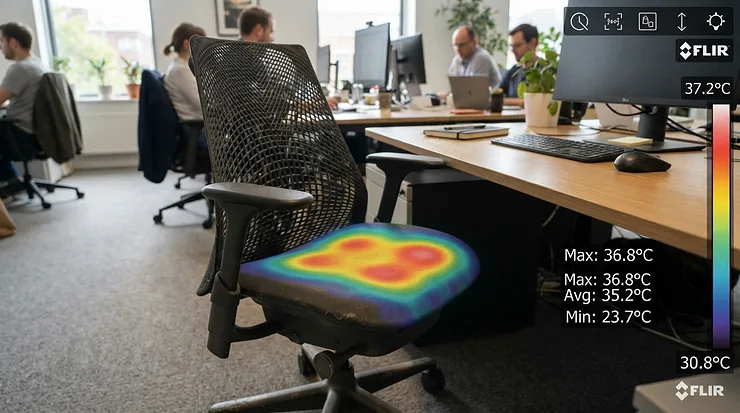
Every home office eventually stages the same quiet argument: full mesh office chair vs foam chair. One camp wants breezy, sweat-free sitting during a July heatwave in a loft conversion. The other wants something that feels like a hug at 4 pm on a drizzly January Tuesday. Both camps are partly right, which is exactly why this purchase trips people up.

The honest answer depends on your body, your room, how long you sit and what you can spend. Even the experts disagree. TechRadar recently ran a feature arguing that foam deserves more credit than the mesh evangelists allow, and it quoted a university ergonomics researcher who said foam seats shouldn’t be written off for long stretches of sitting. The usual rule of thumb still holds, though. Mesh wins on breathability, and foam often wins on initial plushness.
This guide puts seven real chairs through that lens: three full mesh, two mesh-back hybrids with foam seats, one dedicated foam padded office chair, and one that lets you choose. It also covers mesh vs foam seat comfort, full mesh chair pros and cons, seat cushioning materials, long-term comfort and chair durability. Everything comes from manufacturer specifications and published reviews, not hands-on testing, and I’ll say so wherever the evidence is thin. Prices are ranges only, and stock and sellers on amazon.co.uk vary, so check the current listing before you buy.
Quick Comparison: Full Mesh Office Chair vs Foam Chair at a Glance
Here’s the whole line-up on one screen. Warranty terms come from brand or retailer listings and can differ by seller, so confirm them before buying.
| Chair | Seat / back | Price range | Headline warranty | Best For |
|---|---|---|---|---|
| Boulies EP200 | Mesh back; mesh or cold-cure foam seat | Under £250 | 2 years (retailer listing) | Budget buyers who want a seat choice |
| SIHOO M57 | Full mesh | Around £250-£330 | 3 years (brand listing) | Warm rooms and value hunters |
| Boulies OP300 | Mesh or padded mesh back; foam seat | Around £260-£300 | Check seller | Cushion lovers on a budget |
| Steelcase Series 1 | Mesh back; foam seat | Roughly £400-£650, varies by spec | 12 years on mechanism and foam; lifetime on frame | Long-term owners |
| HBADA E3 | Full mesh | Around £450-£650 | 3 years (parts only) | Adjustment fans |
| Secretlab Titan Evo | Cold-cure foam, upholstered | From the mid-£400s | Check current terms | Plush-seat lovers |
| Herman Miller Aeron | Full mesh | Well over £1,000 | 12 years | Decade-plus ownership |
The table shows a clear split. The SIHOO M57 and Boulies EP200 deliver the most mesh for the least money, while the Steelcase Series 1 and Herman Miller Aeron charge for longevity rather than features. If you run hot, lean towards the full mesh rows. If you run cold or crave cushioning, the Boulies OP300 and Secretlab Titan Evo are your natural homes.
💬 Just one click — help others make better buying decisions too!😊
Top 7 Picks: Full Mesh Office Chair vs Foam Chair, Product by Product
These seven are ordered from sensible budget buys towards long-haul investments. Each entry gives the spec, what it means in practice, and what published reviewers actually said.
1. Boulies EP200 — budget pick with a seat choice
The Boulies EP200 sidesteps the whole debate by pairing a tensioned mesh backrest with either a mesh seat or a cold-cured foam seat, so you choose your allegiance at checkout.
Retailer listings show a twist-knob lumbar adjuster, an adjustable headrest and arms, three recline levels and a 120 kg weight rating. The knob matters because you can tweak lower-back pressure in seconds. The weight rating is fine for most people but tight for big-and-tall buyers.
Based on the spec comparison, the foam-seat version suits cooler rooms and shorter sessions, while the mesh-seat version suits sun-baked box rooms. Either way the back is mesh, so airflow reaches the area that usually sweats first.
Reviewers at TechRadar and T3 rated the comfort and value highly. Tom’s Guide noted the seat upholstery pulling and creasing after a couple of hours, and PC Gamer reported a small mesh flaw on its sample unit. Treat those as individual-unit observations rather than guaranteed faults.
Pros:
- ✅ Choice of mesh or foam seat
- ✅ Quick-turn knob for lumbar tuning
- ✅ Strong comfort-for-money reputation
Cons:
- ❌ 120 kg capacity limits larger users
- ❌ Seat upholstery creased in one review
Expect to pay under £250. That is excellent value if your needs are ordinary and your budget is tight.
2. SIHOO M57 — the full mesh value benchmark
If you want the textbook full mesh experience without a four-figure invoice, the SIHOO M57 is the one most UK guides keep returning to.
Mesh covers both seat and back, recline reaches 126 degrees, and the lumbar support moves in two directions, up and down plus in and out. That two-way movement matters because lumbar curves differ far more between people than chair makers like to admit. The 3D armrests and aluminium base add the adjustability and sturdiness you would expect at roughly three times the price of a basic chair.
Here’s what to weigh: Creative Bloq’s reviewer found it supportive and cool, but pointed out that with no cushioning you perch on the chair rather than sinking into it. TechRadar’s reviewer called the lumbar the standout feature but felt the price and competition made it a harder recommendation, and said people around six feet or taller may find the back runs short.
Reviewers also noted that assembly involves more parts than most rivals.
Pros:
- ✅ Genuinely cool in warm rooms
- ✅ Two-way lumbar suits many spines
- ✅ Wide adjustability for the money
Cons:
- ❌ No cushion, so firm for plush lovers
- ❌ Back may run short for tall users
Expect roughly £250-£330. It is a strong value pick for average-height users, and a poorer one if you are tall.
3. Boulies OP300 — classic padded-foam comfort
The Boulies OP300 looks like the office chair you would draw from memory, and that traditional shape is precisely its appeal.
TechRadar’s review lists a mesh or padded mesh backrest paired with a cushioned foam seat. That combination gives you soft landings plus a back that still breathes. The seat depth adjustment is a quiet hero, since too-deep seats are a common reason shorter users end up slouching.
On paper this is the sensible compromise for anyone who finds a bare mesh seat harsh. The trade-off is that foam holds more warmth than open mesh, so it is happier in a mild room than in a stuffy loft. If you are weighing it against the SIHOO M57, you are really choosing between cushioning and cooling.
TechRadar’s reviewer praised the comfort, support and adjustability after long sessions and liked the conventional styling. Independent coverage is thinner than for the Boulies EP200, so I would treat the evidence as encouraging rather than conclusive.
Pros:
- ✅ Cushioned foam seat from day one
- ✅ Mesh or padded mesh back option
- ✅ Traditional look suits any room
Cons:
- ❌ Foam seat runs warmer than mesh
- ❌ Smaller review pool than rivals
Expect around £260-£300. It is fair value, with the best fit for people who dislike firm seats.
4. Steelcase Series 1 — mesh back, foam seat, long cover
The Steelcase Series 1 is the quiet adult in this list: a commercial-grade design aimed at people who would rather buy once than often.
The back comes in 3D Microknit or Air Back mesh, and the seat uses foam with adaptive bolstering, essentially air pockets under the foam to soften edge pressure. Weight-activated tension means the recline adjusts itself rather than demanding a fiddly knob. Steelcase quotes a 400 lb capacity, which is roughly 181 kg and far more generous than most budget chairs.
The headline here is the warranty. Steelcase lists 12 years on the mechanism, gas lift and foam, with lifetime cover on the frame, and a UK reseller lists shorter cover on fabrics. That is a statement about expected chair durability that no budget brand matches.
Owner feedback is thinner here, since most coverage is retailer or manufacturer material. One reseller-page review called the seat harder than expected, which is a single data point, not a trend. Note also that UK resellers separate Home and Office editions by fire-safety testing, so buy the right one.
Pros:
- ✅ Very long headline warranty
- ✅ Foam seat with edge bolstering
- ✅ High weight capacity
Cons:
- ❌ Fewer independent UK reviews
- ❌ Fewer adjustments than feature-heavy rivals
Expect roughly £400-£650 depending on spec, so check current prices. It is good value if you keep chairs for a decade.
5. HBADA E3 — the most adjustable full mesh here
The HBADA E3 is for people who treat chair setup as a hobby.
Listings describe full nylon-and-yarn mesh, an eight-way lumbar system, a four-way headrest, a sliding seat with around 5 cm of depth travel, and recline up to 140 degrees with locking positions. In practice, that depth slide and that recline range make it forgiving across body types and moods, from upright typing to leaning back with a book.
My take on the spec sheet is that this chair buys you a long list of dials, but dials only help if the build quality can hold them steady. That is exactly where KitGuru’s 7/10 review lost marks. It praised the adjustability but was unimpressed by the build quality, and it noted a 300 lb recommended limit and direct pricing starting at £449.99 at the time.
Glowing reviews on the brand’s own store are worth reading but not worth relying on, because the brand curates them.
Pros:
- ✅ Huge adjustment range for the price
- ✅ Deep recline with locking positions
- ✅ Full mesh covers seat and back
Cons:
- ❌ Build quality criticised by KitGuru
- ❌ Parts-only three-year warranty
Expect around £450-£650. It is good value only if you value adjustability above refinement.

6. Secretlab Titan Evo — plush cold-cure foam benchmark
The Secretlab Titan Evo is a gaming chair at heart, but its foam work makes it the best-documented foam padded office chair option here.
Secretlab describes its cold-cure foam as medium-firm and pairs it with a sculpted pebble seat base meant to spread pressure towards the centre. T3 also lists adjustable lumbar and up to 165 degrees of tilt. Cold-cure foam springs back more quickly than cheap slabstock, so the cushion should keep its shape better. That is a claim about material behaviour, not a promise about lifespan.
Expert Reviews praised the balance of firmness and cushioning and judged the leatherette durable, calling it one of the best gaming chairs around. The caveat is thermal. Upholstered foam insulates, so in a warm UK summer expect a warmer seat than any full mesh rival.
Pros:
- ✅ Medium-firm cold-cure foam seat
- ✅ Sculpted seat base spreads pressure
- ✅ Adjustable lumbar and deep tilt
Cons:
- ❌ Upholstery runs warmer than mesh
- ❌ Gaming styling won’t suit every office
Expect to pay from the mid-£400s up into the £900s for larger sizes or premium materials. It is premium-priced, but that is fair if you prize cushioning above all else.
7. Herman Miller Aeron — decade-plus full mesh flagship
The Herman Miller Aeron is what happens when mesh gets taken seriously.
Its 8Z Pellicle mesh covers both seat and back, and PostureFit SL supports the sacrum and lower spine. The seat and back are linked, tilting together so support follows you as you lean. Herman Miller’s 12-year warranty reportedly covers frame, mechanism, mesh and casters. That matters because sagging is the usual way cheap mesh dies.
Reviewers describe the seat as firm and closer to suspended than cushioned, and one found the taut mesh rigid for some people. Reviewers also report examples lasting well beyond the warranty and a deep refurbishment market that props up resale value.
So the question is not whether the Aeron lasts, but whether you can live with its firmness. Try one before you spend a four-figure sum on it.
Pros:
- ✅ Strong durability record and long warranty
- ✅ Cool, even weight distribution
- ✅ Healthy resale and refurbished market
Cons:
- ❌ Firm seat divides opinion
- ❌ Price puts it out of reach for many
Expect well over £1,000 new. It is good value only if you sit long hours for many years.
Setup and Maintenance Guide: Making Any Seat Last
A good chair set up badly is still a bad chair, and the setup rules are the same whichever material you choose.
Fit it properly on day one. Sit right back so your lower back touches the backrest. NHS guidance from Cambridge University Hospitals suggests adjusting the height so your hips sit slightly above your knees, with roughly two fingers’ width between the back of your knees and the seat edge. Next, set the lumbar so it nudges your lower back gently rather than shoving it.
Care for your seat.
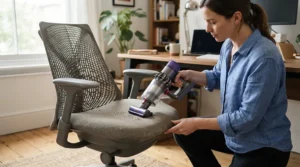
- 🌬️ Mesh: vacuum it gently every month, spot-clean with mild soapy water, and avoid sharp edges. Rivets, zips and belt buckles are mesh’s natural enemies.
- 🛋️ Foam: keep drinks away, wipe upholstery regularly, and rotate where you perch so one patch isn’t crushed daily.
Maintenance schedule. Tighten bolts every three months, because loose fixings cause more wobble than worn parts. Check the casters for hair and grit, and match them to your floor, since softer casters suit hard floors.
First-30-day mistakes to avoid:
- Leaving the seat too high, so your feet dangle.
- Cranking the lumbar to maximum “to be safe.”
- Never loosening the recline tension, so the chair fights you.
- Perching on the front edge of the seat.
A quick tip: give any chair a full week before judging it. Muscles need time to adapt to better posture, and that initial strangeness is not the chair failing.
Real-World Scenarios: Which Chair for Which UK Home Office?
Specs get abstract fast, so here are four plausible buyer profiles and the reasoning behind each match.
Scenario 1 — the loft-room hybrid worker. You work from home three days a week in a south-facing box room with a budget of about £300. Heat is your enemy. The SIHOO M57 gives full mesh cooling with strong lumbar, and the Boulies EP200 in mesh-seat form is a cheaper alternative.
Scenario 2 — the cool-room writer. You sit four to five hours a day in a north-facing garage conversion that never quite warms up. A cushion helps more than airflow here, so the Boulies OP300 or Secretlab Titan Evo makes more sense. Warm foam is a feature, not a flaw, in a chilly room.
Scenario 3 — the all-day developer. You sit nine hours daily and want a chair that outlives your current laptop by a decade. The Steelcase Series 1 or Herman Miller Aeron earns its price through warranty and chair durability. Try the seat firmness first, because that is where regret tends to arrive.
Scenario 4 — the tall user. If you are around six feet or taller, check back height and seat depth before the material. TechRadar’s reviewer found the SIHOO M57 short on support at that height, so consider the HBADA E3‘s extra adjustment range or the larger Aeron sizing. Measure your own back-to-knee length against the listing dimensions, then compare.
Whatever the profile, check the returns policy before ordering. Fit is personal, and a chair you can’t return is a gamble.
What Is a Full Mesh Office Chair vs Foam Chair?
A full mesh office chair uses tensioned, breathable fabric for both seat and back, so air passes through and the surface flexes with you. A foam chair uses padded cushioning, usually polyurethane, wrapped in upholstery. Mesh runs cooler and springier, while foam feels softer and warmer.
In reality, most chairs sit between the two. Tom’s Guide notes that plenty of chairs use a foam seat with a mesh back, which gives some rear-end cushioning while keeping the spine cool. Four common builds are worth knowing:
- 🌬️ Full mesh: mesh seat and back, like the SIHOO M57 and Herman Miller Aeron.
- 🔀 Hybrid: mesh back and foam seat, like the Steelcase Series 1.
- 🛋️ Foam padded: cushioned back and seat, like the Secretlab Titan Evo.
- ⚙️ Choose-your-own: the Boulies EP200, which offers both seat types.
Mesh vs Foam Seat Comfort: What Actually Feels Different
Mesh vs foam seat comfort is not simply a question of soft versus hard. It is about how pressure, heat and movement behave over hours.
Foam spreads load across a surface and feels immediately cushioned, which many people find instantly reassuring. Mesh suspends you, so it feels springier and firmer but lets air pass through. Neither is objectively “better”, and neither is wrong. Your preference mostly depends on whether you value a soft landing or clear support feedback.
| Factor | Full mesh | Foam padded | Best For |
|---|---|---|---|
| Heat and airflow | Open weave breathes freely | Insulates, so warms over time | SIHOO M57 for hot rooms; Boulies OP300 for mild ones |
| First-sit feel | Firm and springy | Soft and enveloping | Secretlab Titan Evo for plush; Herman Miller Aeron for firm |
| Pressure spread | Even if tensioned well | Even if foam is well made | Steelcase Series 1 for bolstered foam |
| Cleaning | Vacuum and spot-clean | Wipe-clean upholstery | HBADA E3 for easy mesh care |
Looking at the comparison, the real divide is thermal. Foam wins when you want cushioning in a cool room, and mesh wins when heat is your problem. A hybrid like the Boulies EP200 hedges the bet by letting the seat decide.
Full Mesh Chair Pros and Cons
A fair look at full mesh chair pros and cons has to start with what mesh does brilliantly, then admit where it falls short.
What mesh does well:
- ❄️ Cooling. Air moves through the surface, so your back and thighs stay drier on long days.
- ⚖️ Lighter, cleaner design. Mesh is lighter than a thick foam chair and easier to wipe or vacuum.
- 🤸 Dynamic support. A good tensioned back flexes as you move rather than locking you into one shape.
- ⏳ Potentially longer shape retention. Quality mesh doesn’t compress the way foam does, though that depends heavily on quality.
Where mesh falls short:
- 🪨 Firmness. Some people, particularly slim ones, find a mesh seat hard at first.
- 📉 Cheap mesh can sag. Prosettings notes that cheaper mesh can show problems within months, which is why mesh doesn’t automatically mean better.
- 🔪 Vulnerability. Sharp objects can snag it, and a tear usually means replacing the whole panel.
- 🧊 Cold rooms. In winter, mesh feels breezy in a way you may not welcome.
Overall, the SIHOO M57 shows the upside of affordable mesh, while the HBADA E3‘s build criticism shows that a long feature list doesn’t guarantee longevity. The lesson is that mesh quality matters more than the mesh label.
Foam Padded Office Chair: Where Padding Still Wins
Mesh gets the headlines, but a well-made foam padded office chair has real strengths that spec sheets underplay.
First, pressure distribution. A properly engineered foam seat spreads weight over a wider area, which can reduce pressure peaks rather than simply moving them. Second, the immediate comfort is hard to argue with. Foam chairs often feel good in the shop and good on day one, which is not always true of mesh. Third, foam suits cooler rooms and air-conditioned offices, where heat retention is a perk rather than a problem.
Quality is everything here. Cold-cure foam rebounds quickly and keeps its support, whereas cheap foam can flatten into a tired pancake. The Secretlab Titan Evo and Boulies OP300 both emphasise cushioned seating, and the Steelcase Series 1 uses bolstered foam in a more commercial format.
Foam padded chairs have drawbacks too:
- 🔥 They retain heat in warm weather.
- 🧽 Upholstery can crease or wear.
- 🕰️ Cheap foam compresses faster than cheap mesh sags, in some reports.
If you run cold, sit in an air-conditioned space or love a soft seat, foam is the rational choice, not the lazy one.

Seat Cushioning Materials Explained
Seat cushioning materials are the least glamorous part of a chair and arguably the most important. A quick tour of what you’ll meet:
- 🧱 Standard polyurethane foam. The budget default. It is soft at first but can compress with heavy daily use.
- 🧪 Cold-cure (high-resilience) foam. Moulded foam that springs back faster and holds its shape longer. The Secretlab Titan Evo and the foam-seat Boulies EP200 both use cold-cure foam, per their makers and reviewers.
- 🧠 Memory foam. Slow to rebound, contouring to the body. It feels luxurious but can trap heat.
- 🪢 Tensioned mesh. Not cushioning at all, but a suspension. It supports by stretching, so quality of weave and frame tension decides everything.
- 🔄 Hybrid builds. A mesh surface over a foam layer, or foam with air pockets beneath, as in the Steelcase Series 1, combines airflow with edge comfort.
The practical takeaway is that “foam” is not one thing. Density and cure method change how a seat behaves in year three. When a listing doesn’t say what foam it uses, treat that silence as a mild warning.
Long-Term Comfort and Chair Durability: What Actually Lasts
Long-term comfort is where chair choices are really tested, because a seat that feels wonderful for an hour can feel mediocre after a year.
Here is a rule of thumb from a commercial US dealer’s guidance: good commercial foam holds its support for roughly five to seven years, while quality mesh can keep its tension for ten years or more. That is a seller’s estimate rather than a lab result, so treat it as a rough guide. The wider point is that chair durability depends on build quality more than on material. A well-made foam seat can outlast a cheap mesh one, and the reverse is also true.
Warranty is the best clue you have. The Herman Miller Aeron and Steelcase Series 1 both offer 12 years on key parts, while budget brands typically offer two to three. Reviewers also report much older Aeron examples still looking presentable, though that is anecdotal.
Movement matters as much as the chair. NHS South Tees’ posture leaflet points out that there is no single correct posture and that changing position is a comfort-friendly habit. So whichever seat you choose, build in breaks.
| Budget tier | Chairs | Value read | Best For |
|---|---|---|---|
| Under £300 | Boulies EP200, SIHOO M57, Boulies OP300 | Low entry cost, shorter warranties | Short-to-medium horizons |
| £400-£700 | Steelcase Series 1, HBADA E3, Secretlab Titan Evo | Mid-range, varied durability | Heavier daily use |
| Over £1,000 | Herman Miller Aeron | High upfront, long track record | Ten-year-plus ownership |
As a simple illustration, a chair costing around £1,200 that lasts 12 years works out at about £100 a year, and a £300 chair that lasts four years works out at about £75 a year. Neither figure is a promise, but the maths shows that cheaper isn’t always cheaper over time. The Steelcase Series 1 arguably offers the best balance between those extremes.
How to Choose: Full Mesh Office Chair vs Foam Chair in Six Steps
Use these steps in order. Each one narrows the field.
- Check your room temperature. Hot or poorly ventilated? Lean towards mesh. Cool or air-conditioned? Foam becomes a real option.
- Be honest about firmness. If you love soft seats, avoid pure mesh. If you dislike sinking, avoid thick foam.
- Measure yourself. Compare your height, weight and back-to-knee length with the listing. Tall users should look past the SIHOO M57 to larger options.
- Decide your session length. Four-plus hours daily rewards adjustable lumbar, seat depth and a durable build.
- Read the warranty. Compare cover on mesh, foam and mechanism separately.
- Check the returns policy. Fit is personal, so buy from a seller that lets you swap.
Quick decision shortcuts:
- ✅ Hot room, mid budget: SIHOO M57
- ✅ Cool room, plush seat: Secretlab Titan Evo or Boulies OP300
- ✅ Can’t decide: Boulies EP200
- ✅ Buying for a decade: Steelcase Series 1 or Herman Miller Aeron
UK Safety and Regulations Guide for Office Chairs
If you work from home for an employer, or run a team, some UK rules apply to your chair. The Health and Safety (Display Screen Equipment) Regulations 1992 set minimum standards for workstations, and chairs are explicitly part of that schedule. In plain terms, a work chair should be stable and allow easy movement and a comfortable position, with sensible adjustability.
A few practical points follow:
- 🏢 Employers: HSE guidance says DSE duties extend to home workers, so ask about an assessment if you work remotely.
- 🛠️ Adjustability: height-adjustable seats and backrests are standard expectations, not luxuries.
- 🔥 Fire safety: foam-filled upholstery has to meet UK fire-safety rules, which is why retailers sell separate Home and Office editions of some chairs, as seen with the Steelcase Series 1.
- 🏷️ Standards: look for references to recognised standards such as BS EN 1335 on commercial chairs.
None of this makes a chair better or worse by itself, but it does mean “it looks ergonomic” is not a standard. Check the adjustability list against what you actually need.
FAQ
❓ Which is cooler in summer, a mesh seat or a foam padded office chair?
❓ How much should I spend on a full mesh chair in the UK?
❓ Does foam go flat after a few years?
❓ Can I add a cushion to a mesh seat?
❓ Is a 12-year warranty worth paying extra for?
Conclusion
So, where does the full mesh office chair vs foam chair debate land? Not on a single winner, which is mildly annoying but true. Mesh wins for cooling, lightness and potentially long shape retention. Foam wins for instant cushioning, pressure spread and cool rooms. The hybrids, like the Steelcase Series 1 and Boulies EP200, exist because many people want a bit of both.
If you want one pick for most UK home offices, I’d start with the SIHOO M57 for warm rooms and the Boulies OP300 for cooler ones. If you want to buy once and forget about it, the Steelcase Series 1 and Herman Miller Aeron are the long-term options. The HBADA E3 suits adjustment fans who can accept its build criticisms, and the Secretlab Titan Evo suits foam lovers who want a plush, well-documented seat.
Remember that the best chair is the one you can adjust properly, sit in comfortably and move away from regularly. Check current prices, confirm the warranty and keep the returns window in mind.
✨ Ready to find your perfect seat?
🪑 Click any highlighted chair above to check current pricing and availability on amazon.co.uk. Your back will thank you long before your bank statement stops sulking!
Recommended for You
- Breathable Mesh Office Chair: 7 Cool, Proven Picks (2026)
- Mesh Back Office Chair: 7 Brilliant UK Picks For 2026
- Executive Chair For Heavy Person: 7 Best Sturdy Picks (2026)
Disclaimer: This article contains affiliate links. As an Amazon Associate, I earn from qualifying purchases. If you purchase products through these links, we may earn a small commission at no additional cost to you.
✨ Found this helpful? Share it with your friends! 💬🤗
