In This Article
Here’s a scene every small business owner recognises: someone stands up from their desk at 4pm, groans like a rusty gate, and mutters “my back is never the same after this chair.” Multiply that by five, ten, or twenty staff, and you’ve got a productivity leak nobody budgeted for. A budget task chair is a wheeled, height-adjustable swivel chair designed for everyday desk work — lighter and simpler than an executive throne, built to keep your spine roughly happy without draining the petty cash tin. It’s the unglamorous workhorse of the modern office, and getting it wrong is far more expensive than getting it right.

This guide exists because most “best office chair” round-ups are written for one person shopping for themselves, not for a founder trying to kit out a whole team without blowing the quarter’s furniture allowance. We’ve dug into real Amazon UK listings, genuine customer feedback, and the regulations that actually apply when you’re the employer buying the seating, not just the person sitting in it. According to the Health and Safety Executive, workstation assessments are a legal requirement wherever staff use display screens for continuous stretches — so this isn’t purely a comfort question, it’s a compliance one too.
You’ll find seven real, currently available chairs across budget, mid-range and slightly-more-premium price bands, a proper breakdown of what actually matters when buying in bulk, and honest guidance on where a budget task chair earns its keep and where it doesn’t.
Quick Comparison Table
| Chair | Typical Price Range | Weight Capacity | Best For |
|---|---|---|---|
| Naspaluro High-Back Office Chair | Under £60 | Around 100kg | Absolute entry-level budget |
| Vinsetto Mesh Office Chair | £45-£90 range | Around 120kg | Space-saving flip-up arms |
| SONGMICS Mesh Office Chair (OBN056B02) | £55-£100 range | Around 100kg | Chairs with a built-in footrest |
| FlexiSpot OC17 | £70-£100 range | Around 136kg | Best all-round value under £100 |
| Amazon Basics Ergonomic Office Chair | £150-£170 range | Around 120kg | Highest review volume, safest bulk pick |
| Hbada Office Task Chair | £90-£120 range | Around 113kg | Compact desks and tight spaces |
| Sihoo M57 | £180-£230 range | Around 150kg | Teams wanting a step up in build quality |
Looking at the spread above, there’s no single “best” budget task chair — there’s a best chair for your specific mix of headcount, desk space and how many hours people actually spend seated. The Amazon Basics Ergonomic Office Chair sits in the sweet spot for most small offices because of its sheer review volume, while the Sihoo M57 is where you land if a handful of staff genuinely live at their desks eight hours a day. Budgets under £60 per seat, like the Naspaluro, make sense for occasional-use spaces such as a reception desk or hot-desking corner, not a developer who’s parked there from 9 to 6.
💬 Found a chair that fits your team? Bookmark this page and come back before you order — the comparison below could save you an expensive mistake.
Top 7 Budget Task Chairs: Expert Analysis
1. Naspaluro High-Back Office Chair — best entry price under £60
The standout here is simple: this is about as cheap as a genuinely adjustable task chair gets on Amazon UK without dropping into stool territory. Underneath the low price you still get a high-back design, flip-up armrests, an adjustable headrest and the tilt-and-recline mechanism you’d expect from something costing twice as much. Height adjustment covers a normal desk-and-monitor range, and the lumbar area is padded rather than sculpted, so support is present but not adjustable in depth or height the way pricier models allow.
Based on the spec comparison with the rest of this list, the Naspaluro is best suited to businesses furnishing a space where chairs aren’t occupied for a full working day — think meeting rooms, hot-desks, or a startup’s very first office before revenue justifies anything fancier. Reviewers researching this bracket note it as a “bargain” at the price, with functioning tilt, recline and flip-arms all present, though independently verified long-term durability data is thinner here than for more established brands, so we’d flag that honestly rather than promise longevity we can’t confirm. What most buyers overlook is that a chair this cheap is disposable furniture by design — that’s not a criticism, it’s the trade-off you’re deliberately making.
Pros:
- ✅ Lowest realistic entry price for a fully adjustable chair
- ✅ Flip-up armrests and adjustable headrest included as standard
- ✅ Tilt and recline mechanism present at this price point
Cons:
- ❌ Limited independently verified long-term durability data
- ❌ Lumbar support is padded, not depth-adjustable
At around £50-£60, this is the chair for testing an idea before committing real money to seating. For anything beyond light or occasional use, budget for an upgrade within twelve months.
2. Vinsetto Mesh Office Chair — best space-saving flip-arm design
The Vinsetto Mesh Office Chair‘s standout feature is its flip-up armrests, which let you tuck the whole chair fully under a desk — genuinely useful if your office runs narrow aisles or hot-desking rotations where chairs need to disappear at the end of the day. The breathable mesh backrest and foam-padded seat sit on a synchro-tilt mechanism in most variants, with height adjustment via the standard gas lift, and Vinsetto rates the frame to around 120kg depending on the specific model.
Here’s what the spec sheet won’t spell out plainly: Vinsetto is a house brand sold across several UK retailers (including Amazon and Tesco Marketplace), so exact specifications and pricing shift between listings more than with a single-storefront brand — worth double-checking the precise model page before ordering multiples. On real-world use, the brand’s aggregated review sentiment across its office chair range leans towards “does what it says for the money,” with breathable mesh and comfortable padding called out consistently, while a recurring theme in wider budget-mesh-chair feedback is that armrests and footrests on flip mechanisms can feel less rigid than fixed ones over time.
Pros:
- ✅ Flip-up arms genuinely save floor and under-desk space
- ✅ Breathable mesh back suited to warmer or poorly ventilated offices
- ✅ Sold through multiple UK retailers, so stock is easy to find
Cons:
- ❌ Specifications vary noticeably between retailer listings
- ❌ Flip-arm mechanisms can loosen with heavy daily use
If your office genuinely needs chairs that tuck away completely, this is one of the few budget options built around that specific problem rather than treating it as an afterthought.
3. SONGMICS Mesh Office Chair (OBN056B02) — best footrest-equipped budget pick
What makes this one stand out on a crowded budget shelf is the pull-out footrest — a feature you’d normally expect to pay considerably more for. Add a tilting backrest that reclines up to 135°, adjustable height, and an adjustable headrest, and on paper this is one of the more feature-dense chairs under £100. SONGMICS also backs it with a two-year guarantee, which matters more than it sounds for a small business ordering several at once, since it’s effectively free insurance against early failures.
Real Amazon UK customer reviews are refreshingly candid about this model’s trade-offs. Reviewers consistently report that the mesh and fabric quality feels better than the price suggests, and multiple buyers mention comfort improving posture-related discomfort within days of use. On the other hand, a recurring complaint in user reviews concerns the armrests, which several owners describe as wobbly or insufficiently sturdy for regular leaning, and the footrest is noted by at least one reviewer as feeling a little flimsy under sustained pressure. That’s a textbook budget-chair trade-off: SONGMICS spent the manufacturing budget on the mechanism you’ll notice daily (the footrest, the recline) rather than the parts you’ll only stress occasionally (the armrests).
Pros:
- ✅ Pull-out footrest rarely seen below the £100 mark
- ✅ Two-year manufacturer guarantee included
- ✅ 135° recline range suits both focused work and breaks
Cons:
- ❌ Armrests reported as wobbly by multiple reviewers
- ❌ Footrest mechanism can feel flimsy under pressure
For staff who take proper breaks at their desk rather than a separate breakout space, the footrest alone can justify choosing this over a plainer budget chair.
4. FlexiSpot OC17 — best all-round value under £100
The FlexiSpot OC17‘s calling card is a built-in coat hanger on the headrest — a small, slightly odd-sounding feature that turns out to be genuinely handy in shared or hot-desk offices where jacket storage is nobody’s priority. Beyond the novelty, you’re getting 2D adjustable armrests, a 3D headrest, four-level tilt tension, and a synchro-tilt lock that reclines between 90° and 130°, all tested to FlexiSpot’s SGS-certified factory standard.
Based on the spec comparison, this sits comfortably above the very cheapest options without approaching mid-range pricing — UK price tracking shows the OC17 regularly dipping toward the low £70s during promotions, against a typical range closer to £85-£100. Aggregated customer feedback is notably positive for a chair at this price: reviewers describe the arms as well-built and non-wobbly, praise the headrest specifically for neck support, and note straightforward assembly. The one consistent gripe in real reviews is maximum seat height, which some taller users find a touch limiting compared with pricier ergonomic chairs. FlexiSpot has built a reputation on standing desks first, and that engineering discipline shows here — this doesn’t feel like a brand’s first attempt at seating.
Pros:
- ✅ Built-in coat hanger is a small but genuinely useful extra
- ✅ Armrests reported as sturdy, not wobbly, by real reviewers
- ✅ SGS-tested build quality from an established ergonomics brand
Cons:
- ❌ Maximum seat height limits suitability for taller staff
- ❌ Recline range narrower than pricier alternatives
For a small business ordering five to ten chairs on a tight but not rock-bottom budget, the OC17 is arguably the least risky pick on this entire list.
5. Amazon Basics Ergonomic Office Chair — best-reviewed high-volume pick
This chair’s standout feature isn’t a single spec — it’s the sheer weight of real customer data behind it. At the time of research, this listing carried a 4.7-star average across roughly 3,100 ratings, with over 200 units bought in the past month alone, making it one of the most reviewed budget office chairs on the entire UK site. It also carries Climate Pledge Friendly recognition for containing at least 50% recycled material, which is worth noting for businesses tracking their own sustainability commitments.
On the specs: expect a fabric-covered ergonomic build with height adjustment, a contoured backrest and seat cushion, and smooth-rolling nylon castors rated for standard office flooring. Reviewers consistently note comfort and supportive cushioning as strengths, with adjustable features praised for letting different body types find a workable position. Here’s what most buyers overlook, though — “Amazon Basics” covers a genuinely wide range of chair models, and not all of them perform equally; a separate, cheaper Amazon Basics line reviewed elsewhere scored poorly for long-session comfort and limited adjustability. The ergonomic fabric model covered here is the one with the review volume and rating to back it up, so if you’re ordering under this brand name, check you’re looking at the same specific listing rather than a similarly named alternative.
Pros:
- ✅ Very large, consistently high-rated review base (4.7 stars, ~3,100 ratings)
- ✅ Recognised recycled-material sustainability credentials
- ✅ High order volume suggests reliable ongoing stock availability
Cons:
- ❌ Amazon Basics model names overlap, so listings need careful checking
- ❌ Armrests are not independently adjustable on this model
If you want the statistically safest bulk order on this list — the one least likely to arrive and disappoint half your team — this is it.
6. Hbada Office Task Chair — best compact chair for small desks
The Hbada Office Task Chair‘s standout trick is armrests that flip fully upright, letting the whole chair slide flush under a small desk — a genuine space-saver for cramped home-office-turned-small-business setups or narrow co-working corners. It pairs a foam-padded seat with a breathable mesh backrest, height adjustment across roughly 17.7 to 21.2 inches, and a raised section in the backrest that provides a modest amount of built-in lumbar shaping.
What most buyers overlook about this model is how deliberately stripped-back it is: beyond seat height, adjustability essentially stops at a single rocking-tension knob under the seat, so it doesn’t recline in the way pricier chairs do. Aggregated review sentiment reflects that trade-off honestly — reviewers describe it as doing exactly what a budget chair on a tight timeline needs to do, without pretending to be more than it is. It’s consistently framed as a “gets the job done” option rather than a standout ergonomic performer, and several reviewers explicitly note that comfort over very long sessions isn’t its strength.
Pros:
- ✅ Armrests flip fully up for genuine under-desk storage
- ✅ Breathable mesh back suited to smaller, warmer rooms
- ✅ Straightforward, low-fuss assembly reported by reviewers
Cons:
- ❌ Very limited adjustability beyond seat height
- ❌ Not recommended by reviewers for full eight-hour sessions
Choose this one specifically for compact desks and shorter working sessions — a reception point, a part-time bookkeeper’s corner, or a small business squeezing extra headcount into a tight room.
7. Sihoo M57 — best step-up pick for heavy daily use
The Sihoo M57‘s standout feature is independently adjustable lumbar depth and height, controlled by two separate knobs on the backrest, each moving through roughly a 10cm range — a level of fine-tuning genuinely uncommon below the £250 mark. The full-mesh seat and back sit on a reinforced aluminium base rated to around 150kg (330lb), with 3D armrests, an adjustable headrest, and tilt-lock functionality rounding out the package.
Multiple independent UK reviewers have called this “the best office chair on Amazon” at its price point, and one outlet’s own production editor uses it daily and rates it highly for comfort. Reviewers consistently note the mesh is a thicker, more durable weave than the flimsy nylon mesh found on sub-£80 chairs, and that it holds up well without sagging. Where the honest picture gets more mixed: at least one detailed review calls the experience “functional but unspectacular,” flagging a compromise on overall build feel compared with genuinely premium chairs, and some reviewers find the seat mesh a touch firm if you prefer a plush, cushioned feel. Based on the spec comparison with everything else on this list, the M57 is priced meaningfully above the others — but for staff clocking a genuine eight-hour day, the adjustability alone can be worth the jump.
Pros:
- ✅ Independently adjustable lumbar height and depth
- ✅ Durable, thicker-grade mesh that resists sagging over time
- ✅ Reinforced aluminium base rated to roughly 150kg
Cons:
- ❌ Noticeably pricier than the rest of this list
- ❌ Seat mesh runs firm for those who prefer plush cushioning
Reserve this one for the desks where people genuinely sit all day — reception is fine with the Naspaluro, but your longest-serving developer probably isn’t.
Ordering Multiple Chairs for a Small Business: The Multi-Chair Order Playbook
Ordering one chair for yourself is a shopping decision. Placing a multi-chair order for six, ten or twenty desks is a small logistics project, and treating it that way saves real money and real headaches. Start by grouping your team by actual usage pattern rather than job title — the person on reception for four hours a day doesn’t need the same chair as the developer glued to a screen for nine. Buying two or three tiers (say, Naspaluro for occasional seats, FlexiSpot OC17 or Amazon Basics Ergonomic Office Chair for the bulk of desks, and Sihoo M57 for your heaviest users) usually beats either extreme of one-size-fits-all cheap or one-size-fits-all premium.
Practically, check bulk or multi-buy pricing options on the product listing before ordering units one at a time — Amazon sellers occasionally list “buy more, save more” tiers that aren’t obvious on the standalone product page. Confirm delivery windows for the full order upfront; large deliveries can arrive in staggered batches, which matters if you’re trying to onboard a new team on a fixed start date. Finally, order one unit first if you’ve never bought the specific model before, sit in it for a few days, and only then commit to the full multi-chair order — a £70 chair that turns out wrong for your office is a rounding error, but the same mistake multiplied by fifteen is a genuinely painful line item.
Setting Up and Maintaining Inexpensive Office Chairs for Staff
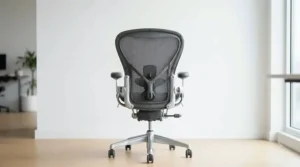
Buying inexpensive office chairs for staff is only half the job — the other half is making sure they’re actually assembled and adjusted correctly, because a badly set-up budget chair causes exactly the discomfort you were trying to avoid. On day one, assign someone (or ask each staff member) to set seat height so thighs run roughly parallel to the floor with feet flat, then adjust the backrest or lumbar knob so it sits in the natural curve of the lower back, not above or below it. Armrests, where adjustable, should let shoulders relax rather than hunch — a surprisingly common first-week mistake is leaving them at the factory default height regardless of the person sitting there.
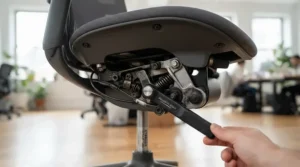
For ongoing maintenance, budget task chairs generally need very little: check and re-tighten armrest and footrest bolts every few months, since these are the components most often flagged as loosening in real customer reviews across this price bracket, and keep gas lift cylinders free of dust to avoid sticking. Set a simple six-monthly check where someone walks the office and flags any chair with a wobble, a slow leak in the gas lift, or a torn cover — catching these early is far cheaper than replacing a chair that’s failed completely. A common first-30-days mistake worth flagging to new staff directly: many people never touch the tilt-tension dial underneath the seat, then complain the chair feels either too stiff or too “floppy” when reclining — a thirty-second adjustment usually fixes both complaints.
Real-World Scenarios: Matching Chairs to Your Team
Scenario one — the five-person startup working from a shared office space. Budget is tight, desks are shared some days and empty others, and nobody’s sitting for a full eight hours consistently yet. This is where a batch of FlexiSpot OC17 or Vinsetto Mesh Office Chair units makes sense — solid mid-budget comfort without over-committing before the business model is proven.
Scenario two — a ten-person accountancy practice with fixed desks and long, screen-heavy days. Here, understaffing on chair quality shows up fast in sick days and complaints. A mix works best: Amazon Basics Ergonomic Office Chair for most of the floor, backed by its strong review base, with a couple of Sihoo M57 units allocated to whoever logs the longest consistent hours, such as the practice’s senior bookkeeper during filing season.
Scenario three — a retail business furnishing a small back-office and reception area. Reception doesn’t need ergonomic sophistication; it needs something presentable and comfortable for short stints between customers. The Naspaluro High-Back Office Chair or Hbada Office Task Chair covers that need without diverting budget away from the shopfitting that customers actually see.
How to Choose Affordable Task Chairs for Small Business
Choosing affordable task chairs for a small business comes down to matching a handful of criteria against how your team actually works, not just picking whatever has the best star rating in isolation.
- Match adjustability to hours seated. Staff at their desk under four hours daily rarely need more than seat-height adjustment; anyone past six hours benefits noticeably from lumbar and armrest adjustment too.
- Check the weight capacity against your actual team. Every chair on this list states a maximum load — verify it comfortably covers your heaviest regular user, not just the office average.
- Prioritise mesh in warm or poorly ventilated rooms. Foam-only seats trap heat; a breathable mesh back like those on the Vinsetto or Sihoo M57 genuinely reduces afternoon discomfort.
- Read the armrest and footrest reviews specifically. Across this entire price bracket, these two components come up most often in genuine complaints — checking them before you buy avoids the most common regret.
- Decide on tiering before you shop, not after. Fixing your budget bands (entry, standard, premium) in advance stops you overspending on every seat “just in case.”
- Factor in delivery and assembly time for the whole order. A multi-chair order can take longer to arrive complete than a single unit — plan around your actual move-in or start date.
- Confirm the returns policy for faulty units in bulk. With several chairs ordered at once, the odds of at least one arriving with a minor fault rise — know the return window before you commit.
Common Mistakes When Buying Budget Office Seating
The single most common mistake in budget office seating is buying purely on price per unit without checking weight capacity, which then causes squeaks, sags or outright failures within months for anyone above the stated limit. A close second is ignoring genuine customer reviews in favour of the manufacturer’s own product photography — the armrest wobble and footrest flimsiness flagged repeatedly in this guide only show up once real owners have lived with a chair for weeks, not in a glossy listing image.
Another frequent error is treating every desk in the office identically, buying twenty of the same chair regardless of who sits where or for how long — as covered above, tiering by actual usage nearly always produces better outcomes per pound spent. Businesses also commonly forget to physically test-fit one unit before a full order, only to discover the maximum seat height doesn’t suit a taller member of staff after fifteen chairs have already arrived. Finally, many buyers skip checking UK fire-safety labelling on unfamiliar or lesser-known brands entirely — worth a moment’s attention, and covered properly in the regulations section below.

Budget Task Chair vs Premium Ergonomic Chair
It’s worth being honest about what separates a genuine budget task chair from a premium ergonomic chair costing several hundred pounds more, because the difference isn’t marketing spin — it’s real engineering.
| Factor | Budget Task Chair | Premium Ergonomic Chair |
|---|---|---|
| Typical price | Roughly £50-£230 | Often £350-£1,200+ |
| Lumbar support | Fixed or basic height adjustment | Independently adjustable depth, height, sometimes tracking movement |
| Warranty | Commonly 1-2 years | Commonly 5-12 years |
| Weight rating | Usually 100-150kg | Often 130-160kg+, with big-and-tall variants |
| Best For | Standard hours, standard budgets | Full-time, all-day users with existing back concerns |
The gap isn’t purely comfort — it’s mechanism sophistication and materials that hold up under years of continuous compression, which is exactly why premium chairs carry warranties five or six times longer. For a small business, the honest calculation is usage-hours per pound: a premium ergonomic chair earns its price for someone sat there nine hours a day, five days a week, while the same spend across three budget task chairs for lighter-use desks almost always delivers more total value across the team.
💬 Still deciding which tier fits your office? The comparison above is worth a second look before you place a bulk order.
Small Business Furnishing on an Office Fit-Out Budget: Long-Term Cost & Maintenance
When small business furnishing decisions get made under time pressure, chairs are often the line item that gets squeezed hardest — which is understandable, but not always the cheapest choice over a multi-year horizon. A genuine office fit-out budget should treat seating as a three-to-five-year cost, not a one-off purchase, because replacement frequency is where budget chairs quietly cost more than they first appear to.
Run the maths simply: a £60 chair replaced every eighteen months across five years costs roughly £200 in seating alone per desk, before accounting for the admin time of reordering, waiting on delivery, and disposing of the old unit. A £150-£180 chair from further up this list, replaced perhaps once in that same five-year window, can land in a similar total-cost bracket while delivering noticeably better day-to-day comfort throughout. That’s not an argument for always buying premium — it’s an argument for calculating total cost of ownership per desk rather than judging purchases purely on the up-front receipt. For desks with genuinely light or occasional use, the cheaper option still wins outright, since the replacement cycle rarely gets triggered at all.
Practically, build a simple annual seating budget line rather than treating chair purchases as one-off surprises, and keep a small buffer (10-15% of total spend) specifically for replacing any unit that fails early or doesn’t suit a new hire — it’s a far smaller shock to a fit-out budget than an unplanned emergency order for one chair at full price with rushed delivery.
Safety, Regulations and Compliance for UK Office Seating
Anyone furnishing a UK workplace needs to know that seating isn’t purely a comfort choice — it sits inside actual law. The Health and Safety (Display Screen Equipment) Regulations require employers to carry out a workstation assessment for any staff member using a screen continuously for an hour or more, covering seating as part of that wider assessment; this applies whether you employ two people or two hundred. Good posture during screen work depends heavily on seat height, back adjustability and lumbar support being genuinely usable by the person sitting there, not just theoretically present on a spec sheet.
Separately, upholstered furniture sold in the UK — including office chairs with foam padding and fabric or mesh covers — falls under the Furniture and Furnishings (Fire)(Safety) Regulations 1988, which set ignitability testing standards (commonly referenced via BS 5852) that legitimate UK and EU-facing retailers must meet before a chair reaches sale. In practice, this means sticking to established, traceable listings — every chair featured in this guide is sold through mainstream UK retail channels with visible compliance labelling — rather than obscure third-party sellers offering suspiciously steep discounts on unfamiliar brands. It’s a small due-diligence step that costs nothing and meaningfully reduces genuine risk.
Features That Actually Matter (And Those That Don’t)
Cutting through the marketing noise on a typical budget task chair listing, a handful of features genuinely earn their place, and a few are mostly there to justify a higher price tag.
Actually matters: adjustable lumbar support (even basic height adjustment beats none at all), a stated and realistic weight capacity, breathable mesh in warm rooms, and armrests rigid enough to bear real weight when someone pushes up to stand. A verified return policy and a warranty of at least a year also matter more than they get credit for, since they’re your safety net against the exact defects flagged repeatedly in this guide.
Matters less than the listing suggests: headrests are pleasant but rarely essential for standard desk-height monitor use; “gaming chair” styling and bright stitching add cost without adding ergonomic value for office work; and a dizzying number of tilt-lock positions sounds impressive but most users settle on one or two preferred angles within the first week regardless. Based on the spec comparison across all seven chairs here, the genuinely differentiating features cluster around lumbar adjustability, mesh quality and armrest rigidity — everything else is largely aesthetic preference dressed up as a functional upgrade.
FAQ
❓ What is a good budget for an office chair for staff?
❓ How many hours can you sit in a budget task chair?
❓ Do office chairs need to meet UK fire safety standards?
❓ Is it cheaper to buy office chairs in bulk?
❓ What's the difference between a task chair and an ergonomic chair?
Conclusion
Kitting out a small business with seating doesn’t have to mean choosing between an uncomfortable team and a blown budget — it means matching the right chair to the right desk, which is a very different exercise from just picking whatever’s cheapest or most expensive on the page. The Naspaluro and Vinsetto cover occasional and space-constrained seats cheaply; the SONGMICS, FlexiSpot OC17 and Amazon Basics Ergonomic Office Chair carry the bulk of a typical office comfortably; and the Hbada and Sihoo M57 round out the tight-space and heavy-use extremes respectively.
Whichever mix you land on, treat the purchase the way this guide has: check real reviews for the specific model, confirm weight capacity against your actual team, and budget for seating as an ongoing cost rather than a one-off tick-box. Do that, and a genuinely modest spend on the right chairs will quietly save far more in comfort, retention and fewer 4pm groans than most business owners expect.
✨ Ready to compare prices and stock for these picks? Click through on any highlighted chair above to check current availability before your next office order — your team’s afternoons will thank you! 🪑
Recommended for You
- Task Chair Under £100: 7 Best Budget Picks for UK Desks (2026)
- Ergonomic Office Chair for Tall Person: 7 Best UK Picks (2026)
- Ergonomic Office Chair for Back Pain: 7 Picks Tested for 2026
Disclaimer: This article contains affiliate links. As an Amazon Associate, I earn from qualifying purchases. If you purchase products through these links, we may earn a small commission at no additional cost to you.
✨ Found this helpful? Share it with your team before your next furniture order! 💬🪑
